How to Choose the Best Geotextile Membrane Non Woven for Your Project?
When embarking on a project that requires a Geotextile Membrane Non Woven, making the right choice is essential. Such membranes play a pivotal role in soil stabilization, erosion control, and drainage systems. Understanding their unique properties can significantly impact the project’s success. Each type of Geotextile Membrane Non Woven has specific characteristics tailored for diverse applications.
Choosing the best membrane involves evaluating factors such as permeability, strength, and durability. You will need to consider the environmental conditions where it will be used. A well-suited Geotextile Membrane Non Woven can enhance project longevity. Yet, mistakes can lead to inadequate performance or unnecessary costs. Research and expert advice can provide invaluable insights, assisting you in selecting the most appropriate product.
Incorporating high-quality Geotextile Membrane Non Woven into your project can yield substantial benefits. However, it’s crucial to remain critical of the options available. Regularly assess new innovations in the field, as materials and technologies evolve. This approach helps ensure that your choice remains aligned with project demands and standards.
Understanding Geotextile Membranes: Types and Applications
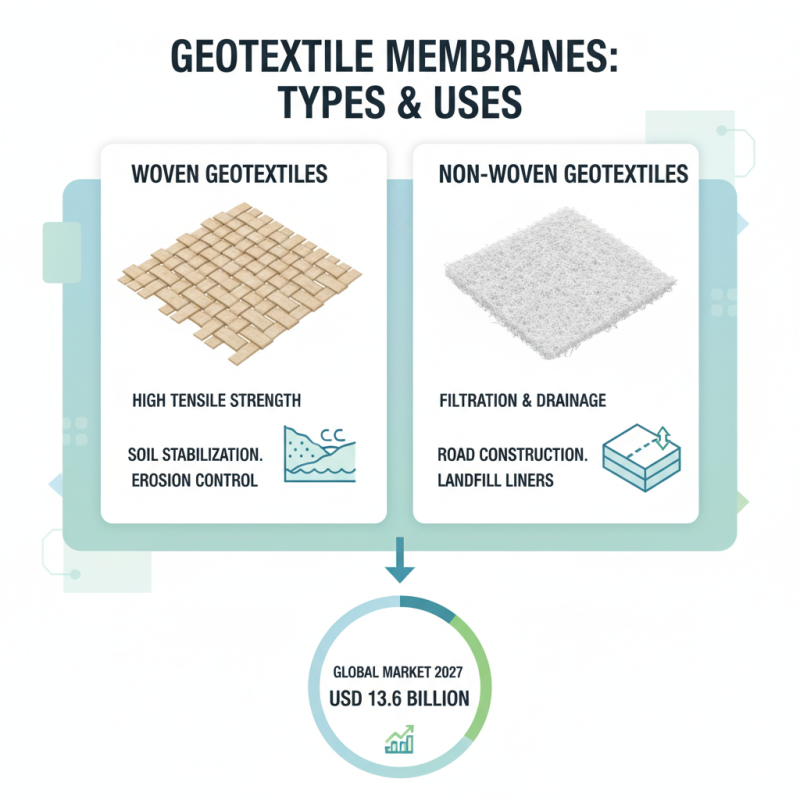
Geotextile membranes are essential in modern civil engineering and construction projects. They come in two main types: woven and non-woven. Woven geotextiles, typically made from polypropylene, provide high tensile strength. They are ideal for applications like soil stabilization or erosion control. Non-woven geotextiles, on the other hand, are made from fibers that are bonded together, offering excellent filtration and drainage capabilities. According to a recent industry report, the global geotextile market is projected to reach USD 13.6 billion by 2027, showcasing the increasing demand for these materials.
When selecting the appropriate geotextile membrane for your project, consider the specific project requirements. Factors such as soil type, expected loads, and environmental conditions play a critical role. In certain applications, using a non-woven membrane might lead to complications like clogging due to fine soil particles. In locations with high water flow, a woven membrane might offer better performance. The confusion here reflects the complexity of geotextile selection. An in-depth understanding of these materials can help avoid project delays caused by incorrect choices, a challenge faced by many professionals in the field.
Awareness of the materials’ lifecycle impacts is also growing. Studies indicate that geotextile membranes can reduce the environmental footprint of construction projects by minimizing material waste. However, disposal concerns arise, as non-biodegradable options can contribute to long-term pollution. This presents an ongoing challenge for engineers and environmentalists alike. Understanding these trade-offs and making informed choices is crucial for sustainable project execution.
Key Factors to Consider When Choosing Non-Woven Geotextiles
Choosing the right
non-woven geotextile membrane
requires careful consideration of several key factors. Start by assessing the soil type at your project site. Different soils have varying drainage and filtration needs. For instance, sandy soils may require tighter filtration to prevent erosion, while clay soils may not need as much filtration.
Another important factor is the membrane's
strength and durability.
Evaluate the tensile strength and UV resistance of the material. This ensures the membrane can handle environmental stressors and maintain its integrity over time. A strong geotextile can also prevent punctures and tears during installation.
Tips: Always review technical specifications. Look for industry standards that the products meet. Engaging with professionals or reading case studies may provide valuable insights. Remember that
cost
shouldn't be the only factor.
Quality and suitability are crucial for durability and performance in the long run. Evaluate your long-term needs.
Rushing into a purchase can lead to costly mistakes.
Evaluating Durability and Functionality for Your Project Needs
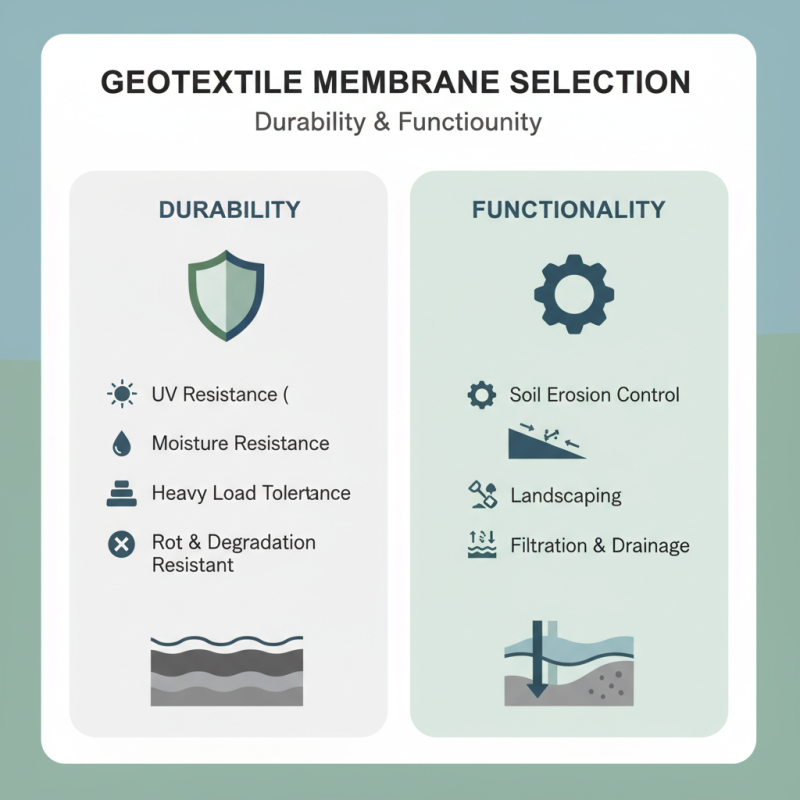
When selecting a geotextile membrane, durability and functionality are key factors. Durability ensures that the membrane can withstand environmental challenges. For instance, UV exposure, moisture, and heavy loads can all compromise a membrane's lifespan. Consider materials that are resistant to rot and degradation. This can be especially crucial in projects involving soil erosion control or landscaping.
Functionality relates to how well the membrane performs its intended job. Different projects require different attributes. A membrane used in filtration must allow water to pass through while blocking soil particles. Conversely, a membrane for soil stabilization should provide strong support. Assess the specific needs of your project before making a decision. Look for technical specifications that highlight these features.
It's important to reflect on the variability of project conditions. What works well in one setting may be ineffective in another. Conducting a site analysis can reveal unique challenges. This may help identify potential shortcomings in your chosen membrane. Always be open to reassessing your options as new information comes to light. This approach ensures a better alignment of the geotextile membrane with your project’s requirements.
Cost Analysis: Budgeting for Non-Woven Geotextiles
When considering non-woven geotextiles, cost is a significant factor. Recent industry reports indicate that these materials can range from $0.50 to $1.50 per square foot. The price depends on various factors, including thickness, strength, and permeability. Low-cost options may save money upfront but could lead to higher long-term expenses due to reduced durability or effectiveness.
Understanding the specific needs of your project is crucial. For instance, a lighter fabric may be cheaper but offer less support in high-traffic areas. Increasing the budget minimally can yield better performance and avoid future costs. Not investing in quality can be counterproductive and costly in the long run.
**Tip:** Always perform a life-cycle cost analysis. It helps to understand the total cost of ownership, not just initial purchase prices.
Furthermore, consider the project’s environmental impact. Some non-woven geotextiles have eco-friendly options that might be slightly more expensive. These require careful budgeting but can ease regulatory concerns. Balancing cost and sustainability can be challenging but pivotal for project success.
**Tip:** Consult with industry professionals to estimate the true costs associated with installation and maintenance. Their expertise is invaluable for accurate budgeting.
Sourcing and Comparing Suppliers for Optimal Selection
When it comes to selecting a non-woven geotextile membrane, sourcing and comparing suppliers is crucial. A well-chosen supplier can greatly affect the success of your project. Begin by researching different suppliers to gauge their reputation within the industry. Look for testimonials from previous clients to understand how they operate. Contact several suppliers to ask about their manufacturing processes and material sources.
Tips: Pay attention to how long suppliers have been in business. Longevity often indicates reliability and experience in the field. Consider visiting manufacturing facilities if possible. This direct interaction can provide insights into their operational standards.
Also, request samples of the geotextile membranes before making a decision. Observing the material firsthand allows you to evaluate its quality and suitability for your project. Don't hesitate to ask detailed questions about the products. Transparency in their answers indicates a trustworthy supplier.
Ultimately, comparing multiple suppliers can reveal significant differences in quality and pricing. Some might offer features that aren’t immediately obvious. Be cautious of overly low prices; they can hint at compromised quality. Balancing cost with quality is vital.
Geotextile Membrane Non Woven Properties Comparison