What is the Density of HDPE and How Does it Compare?
High-Density Polyethylene (HDPE) is a widely used plastic known for its resilience and versatility. Understanding HDPE density is essential for various applications, from packaging to construction. This material exhibits specific properties influenced by its molecular structure, which affects its overall density.
HDPE density typically ranges from 0.93 to 0.97 grams per cubic centimeter. This range is significant as it helps distinguish HDPE from other plastics. For example, compared to LDPE, HDPE is denser and sturdier. It is vital to explore how these density variations impact performance in real-world scenarios.
Different production methods also contribute to density differences in HDPE. The density can shift depending on processing conditions. This variability may present challenges in application selection. Designers often face tough decisions regarding material choice. It is crucial to consider these factors for optimal results and quality. Understanding HDPE density ultimately aids in making informed choices in material selection.

Understanding HDPE: Definition and Characteristics
High-density polyethylene, or HDPE, is a versatile plastic known for its strong molecular structure. It possesses remarkable durability and resistance to impact. This makes it ideal for a variety of applications, including containers, pipes, and automotive parts. HDPE is lightweight yet robust, offering a balance that appeals to many industries. Its density typically ranges from 0.93 to 0.97 g/cm³, which contributes to its unique characteristics.
In addition to its strength, HDPE is resistant to chemicals and moisture, making it suitable for outdoor use. However, it can become brittle at low temperatures, a factor that users need to consider.
Its recyclability is also an important feature. Many people still do not recycle HDPE properly. While it holds promise for eco-friendly practices, consumer habits can undermine these benefits. Understanding HDPE’s properties helps in maximizing its potential while also recognizing its limitations.
Measuring the Density of HDPE: Methods and Standards
Measuring the density of High-Density Polyethylene (HDPE) is key in various applications. HDPE typically has a density ranging from 0.93 to 0.97 grams per cubic centimeter. This range can reflect different manufacturing processes or variations in the polymer's composition. Accurate measurement of density is crucial in ensuring quality control in production.
Standard methods to measure HDPE density include water displacement and pycnometry.
Water displacement is straightforward. Submerge the sample in water, noting the volume displaced. Pycnometric methods are more precise, using specialized equipment to measure mass and volume. The ASTM D1505 standard is commonly used for plastics like HDPE. It outlines how to obtain density values under controlled conditions.
Variability exists. Factors such as temperature and processing conditions influence density. This variability can pose challenges for manufacturers aiming for consistency.
For example, a study noted differences in density due to additives in HDPE mixtures. Such findings prompt careful consideration of material formulation and testing methods. Understanding these variations is vital for ensuring product performance.
Comparative Analysis: HDPE Density vs Other Common Plastics
High-Density Polyethylene (HDPE) is widely recognized for its robustness and versatility. Its density typically ranges from 0.93 to 0.97 g/cm³. This places it in a unique position when compared to other common plastics. For example, Polypropylene (PP) has a density of approximately 0.90 g/cm³, making it slightly lighter than HDPE. Meanwhile, PVC can be denser, ranging from 1.3 to 1.5 g/cm³.
When considering these materials, density influences various characteristics. For instance, heavier plastics may be more durable but can be cumbersome. Lighter plastics, like PP, offer flexibility but might sacrifice strength. HDPE strikes a balance between the two, providing durability without excessive weight.
Tips: When selecting materials for a project, assess density alongside intended use. Consider how weight may impact performance. Testing is crucial. It helps identify the best option for specific applications. Always reflect on your choices and their implications. The right density can lead to better long-term results.
Density Comparison of HDPE and Other Common Plastics
Factors Affecting the Density of HDPE in Varying Conditions
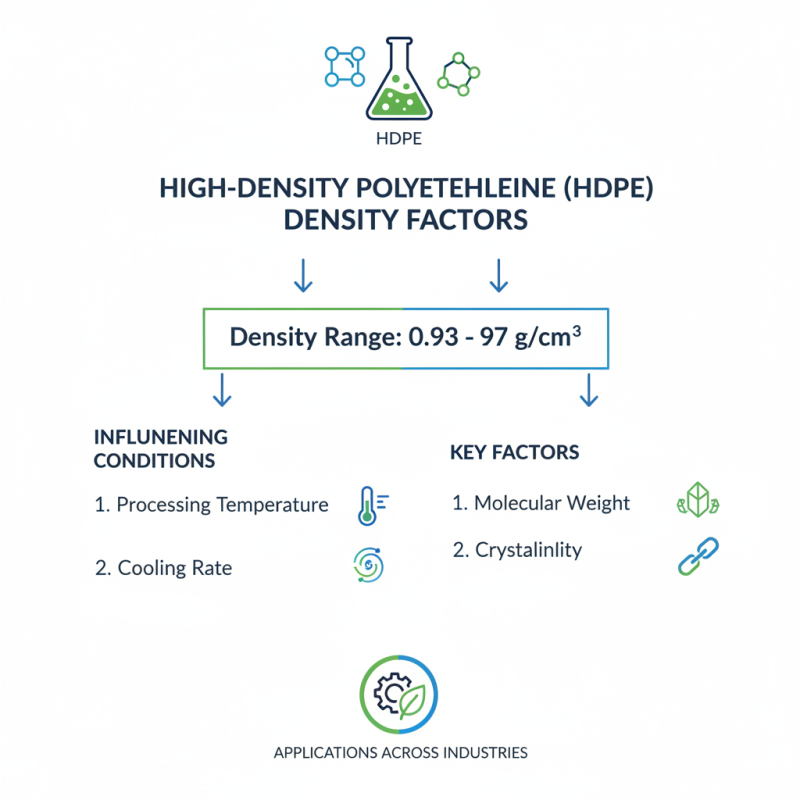
The density of high-density polyethylene (HDPE) is influenced by several conditions. Understanding these factors helps in its application across industries. Typically, HDPE has a density ranging from 0.93 to 0.97 g/cm³. This variance is not just a matter of composition; it reflects the processing conditions during production.
Temperature plays a critical role. As temperatures rise, the density of HDPE can slightly decrease. A study noted that at elevated temperatures, the molecular structure expands, leading to reduced density. Moreover, pressure during the manufacturing process can also add complexity. High-pressure conditions tend to create denser HDPE, impacting its mechanical properties.
Moisture content and additives are other influential factors. Even small amounts of moisture can alter the density. For instance, fillers added to HDPE can either increase or decrease its density, depending on their nature. Ignoring these variables can result in unexpected performance issues. These observations highlight the necessity of careful consideration in HDPE's applications, suggesting that precision in production must not be overlooked.
Applications and Implications of HDPE Density in Industry
High-density polyethylene (HDPE) is a versatile material widely used across various industries. Its density typically ranges from 0.93 to 0.97 g/cm³. This lightweight characteristic plays a key role in its applications. For example, in packaging, HDPE is favored for its strength and durability. It can easily withstand rough handling during shipping.
In construction, HDPE is used for piping systems, thanks to its impressive tensile strength. However, there are implications to consider. The density affects how these products perform under different environmental conditions. In some cases, HDPE can become brittle in cold weather. This vulnerability is crucial for outdoor applications.
Moreover, the production process of HDPE raises questions about sustainability. The energy consumed during manufacturing impacts the overall lifecycle of the material. Recycling efforts are improving, yet they are not perfect. Many HDPE items still end up in landfills, further complicating environmental concerns. Balancing efficiency and ecological responsibility remains a challenge for industries relying on HDPE.
Density of HDPE and Its Comparison in Various Applications
| Material |
Density (g/cm³) |
Common Applications |
Advantages |
| HDPE |
0.93 - 0.97 |
Plastic bottles, piping, geomembranes |
High strength-to-density ratio, chemical resistance |
| LDPE |
0.91 - 0.93 |
Plastic bags, food packaging |
Flexibility, low-density |
| PP (Polypropylene) |
0.90 - 0.92 |
Automotive parts, containers |
Stiffness, chemical resistance |
| PVC (Polyvinyl Chloride) |
1.35 - 1.45 |
Pipes, doors, windows |
Durability, low cost |