How to Use Soil Reinforcement Geogrid for Better Stability?
Soil degradation and instability are pressing concerns in construction and landscaping. In recent years, Soil Reinforcement Geogrid has emerged as a powerful solution to enhance ground stability. This innovative material provides a strong framework for soil, allowing it to support heavy loads and resist deformation.
Understanding how to effectively use Soil Reinforcement Geogrid is crucial. It involves selecting the right type and applying it correctly. However, it is not without challenges. Sometimes, the choice of geogrid may not fit specific soil conditions. Improper installation can also lead to failures, negating its benefits.
As we explore the techniques for better stability using Soil Reinforcement Geogrid, we must acknowledge these potential pitfalls. Learning from past experiences will help avoid common mistakes. With careful planning and execution, Soil Reinforcement Geogrid can significantly improve soil performance and ensure long-lasting results.
Understanding Soil Reinforcement Geogrid and Its Applications
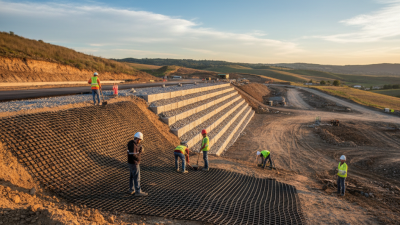
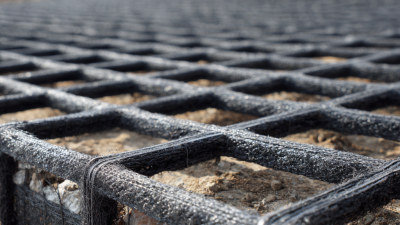
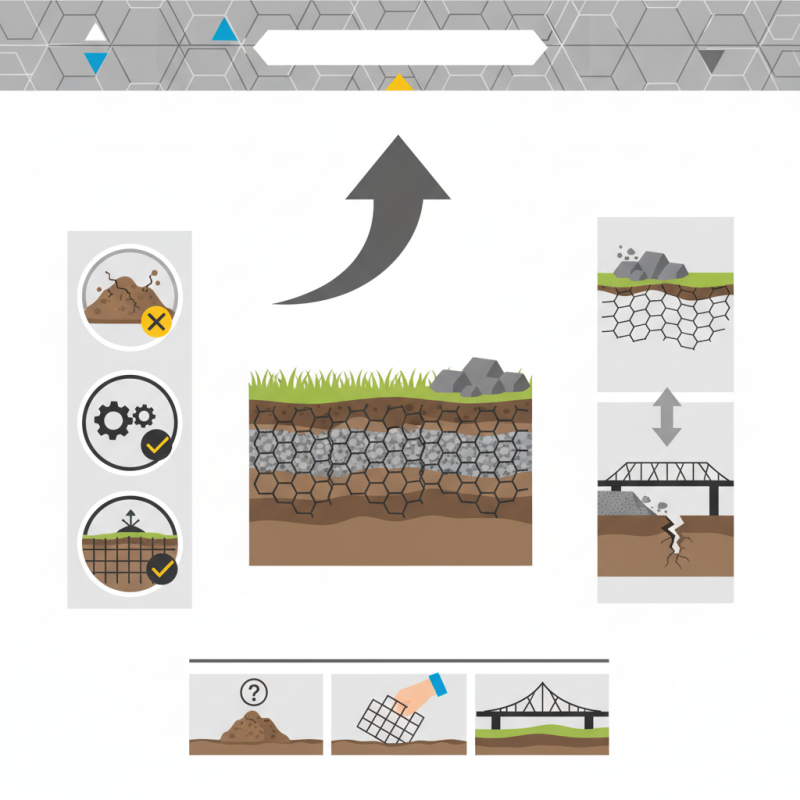
Soil reinforcement geogrids are important for various construction projects. They enhance soil stability by distributing loads effectively. These grids come in various types, offering flexibility for different applications. For instance, they can be used in roadways or retaining walls. The grid structure allows for efficient load transfer, which reduces soil deformation.
In practice, soil reinforcement involves careful planning. The type of geogrid selected impacts the overall performance. Improper choice might lead to inadequate support or even failure. Testing the soil is crucial to determine its properties. Without this, the effectiveness of the geogrid may be compromised.
Real-world applications demonstrate both successes and challenges. For example, in slope stabilization, geogrids often work well but may not perform under extreme conditions. Monitoring and adjusting deployment strategies can lead to better outcomes. Attention to detail is essential, as even small oversights can affect stability. Unforeseen complications may arise, necessitating further adjustments or redesigns. Ensuring all factors are considered can help achieve lasting stability.
Key Benefits of Soil Reinforcement Geogrids for Ground Stability
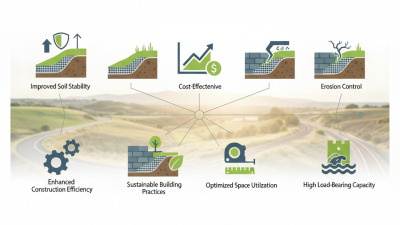
Soil reinforcement geogrids play a pivotal role in improving ground stability. These materials enhance the load-bearing capacity of soil. According to a report by the American Society of Civil Engineers, using geogrids can improve stability by up to 40%. This impressive statistic illustrates their effectiveness.
One key benefit is improved drainage. Geogrids create voids that allow water to flow through. Effective drainage reduces soil erosion. It also lowers the risk of landslides in heavy rainfall areas. Additionally, they can increase the lifespan of roads and pavements. With proper installation, road settlement can be reduced by up to 30%. However, it’s essential to ensure proper placement. Misalignment can negate the benefits.
Another advantage is cost-effectiveness. For projects requiring substantial earthworks, geogrids can cut costs significantly. A study found that using geogrids reduced material costs by around 20%. Yet, relying solely on these materials without rigorous site assessments can lead to failures. It’s a delicate balance between innovation and traditional engineering practices.
How to Use Soil Reinforcement Geogrid for Better Stability? - Key Benefits of Soil Reinforcement Geogrids for Ground Stability
| Benefit |
Description |
Application |
Effectiveness |
| Increased Load Bearing Capacity |
Reinforcement geogrids enhance the load distribution, allowing the soil to support heavier loads. |
Highway and railway constructions |
High |
| Erosion Control |
Geogrids stabilize the soil, helping to prevent erosion in vulnerable areas. |
Slope stabilization and embankments |
Medium |
| Cost-Effectiveness |
Using geogrids can reduce the amount of required soil and aggregate materials, thus lowering costs. |
Commercial and residential developments |
High |
| Improved Longevity |
Geogrids used in soil reinforcement can extend the lifespan of the constructed facility. |
Bridges and roadways |
High |
Optimal Installation Techniques for Maximum Geogrid Performance
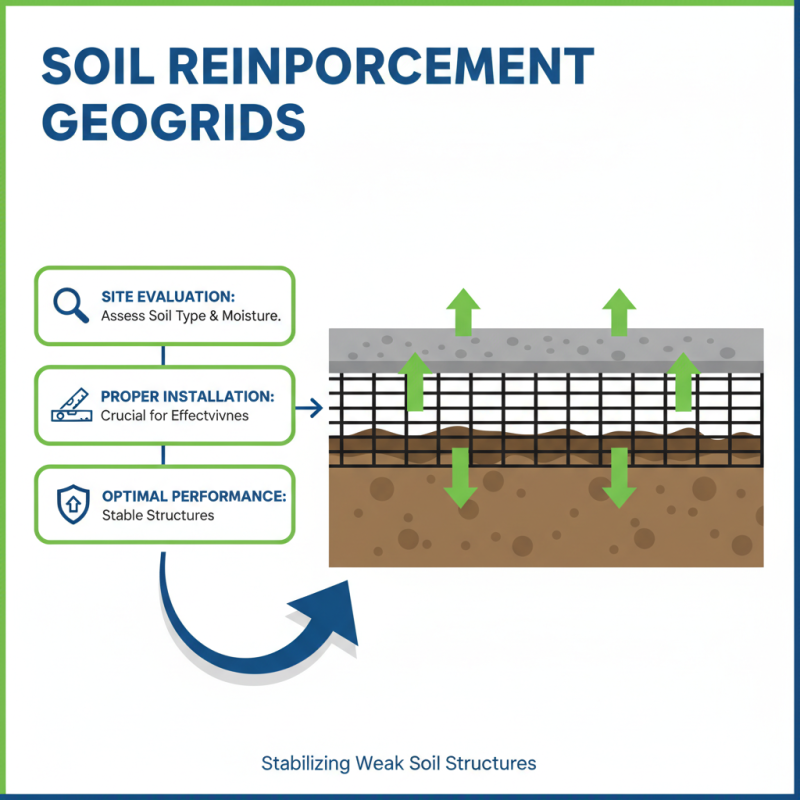
Soil reinforcement geogrids are essential for stabilizing weak soil structures. Proper installation significantly impacts their effectiveness. To ensure optimal performance, begin with a thorough site evaluation. Assessing soil type and moisture levels enables informed decisions on geogrid selection and placement.
When installing, ensure the geogrid is stretched evenly across the surface. Uneven tension can lead to weak points, increasing the risk of failure. Incorporating drainage materials around the geogrid is crucial. Poor drainage can lead to water accumulation, weakening the soil and the geogrid’s grip. Pay attention to overlap areas; these should be adequately secured to prevent shifting during load application.
During installation, it is easy to overlook minor details. Ensuring proper compaction around the geogrid might take extra time but is essential. Sometimes, the temptation is to rush this process, though this can lead to long-term issues. Regular inspections post-installation can reveal hidden problems early. Addressing small concerns promptly can prevent significant instability later.
Evaluating Soil Properties: Data Needed for Effective Geogrid Use
Soil reinforcement using geogrids can significantly enhance stability. However, successful application relies heavily on accurate soil property evaluation. Understanding soil type and moisture content is essential. According to industry reports, soil's bearing capacity can vary widely. For instance, cohesive soils may range from 10 to 35 kPa, while granular soils can exceed 50 kPa. This variability can affect how geogrids distribute loads.
Field tests help determine soil properties. Standard Penetration Tests (SPT) and Cone Penetration Tests (CPT) are frequently employed. These tests provide vital data, especially for granular soils. Proper sampling and analysis let engineers make informed choices. A mismatch in geogrid selection could lead to structural failures. It is crucial to infuse caution in interpreting results. Sometimes, results can be misleading due to environmental conditions or sample disturbance.
Water content also plays a key role. High moisture levels can weaken soil strength. Geogrids are less effective if soil is overly saturated. Data from various engineering studies indicate that reinforcing saturated sands might only yield minimal improvements. Professionals should reassess strategies when faced with wet conditions. Making careful evaluations helps achieve better results in geogrid performance. Attention to detail in soil analysis ultimately leads to more robust and reliable applications.
Soil Properties and Geogrid Reinforcement Effectiveness
Case Studies: Successful Applications of Geogrids in Civil Engineering Projects
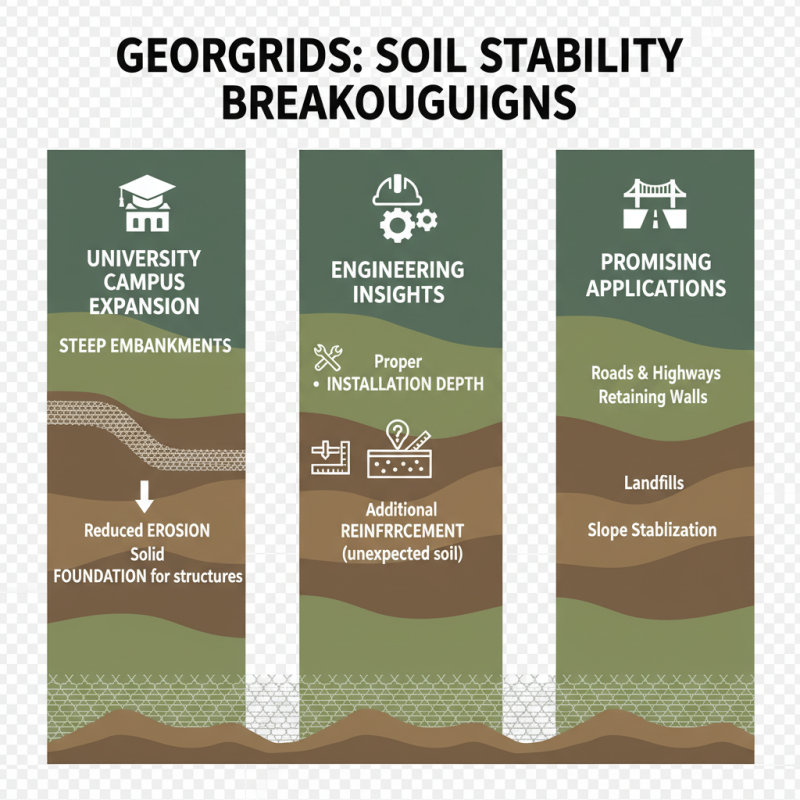
Geogrids have shown remarkable promise in enhancing soil stability across various civil engineering projects. In one university campus expansion project, geogrids were used to support steep embankments. The results were impressive, reducing erosion and providing a solid foundation for new structures. Engineers reported challenges, such as ensuring proper installation depth. Some sections needed additional reinforcement due to unexpected soil conditions.
Another notable case is a highway construction project. Here, a significant amount of fill was required to elevate the road. Engineers implemented a geogrid beneath the fill layers. This approach minimized settlement and improved load distribution. However, the project faced issues during heavy rains, which caused temporary instability. Adjustments were made to the drainage systems to alleviate these problems.
In an urban development project, geogrids helped stabilize retaining walls. Designers noted that soil behind the walls could shift over time. Adding geogrids effectively mitigated this risk. In some instances, the wall’s alignment had to be revisited as settling occurred. These adjustments provided valuable lessons for future projects, highlighting the importance of continuous monitoring and adaptability when using geogrids.