Top Quality Hdpe Geomembrane for Global Buyers?
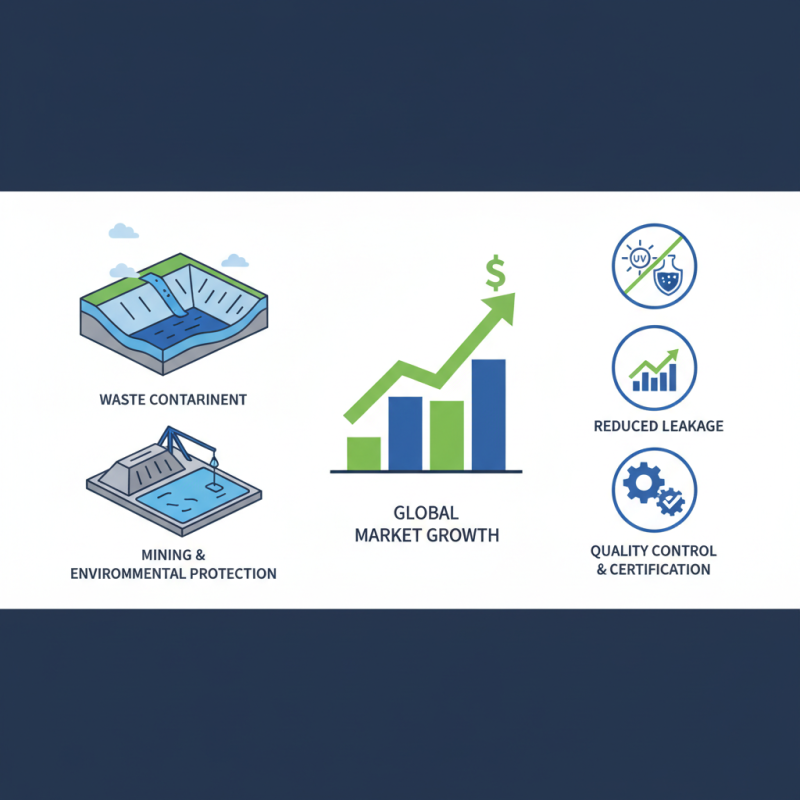
High-Density Polyethylene (Hdpe) Geomembranes are increasingly essential in various industries worldwide. According to recent industry reports, the global geomembrane market is projected to reach USD 3.3 billion by 2026, with a significant share attributed to Hdpe materials. Their durability and impermeability make them a preferred choice for waste containment, mining, and environmental protection applications.
Notably, Hdpe Geomembranes offer enhanced resistance to UV radiation and chemicals compared to other materials. This quality is crucial for projects with long-term exposure to harsh conditions. Recent studies indicate that the performance of Hdpe materials can significantly reduce leakage rates, enhancing the efficiency of containment systems. However, quality varies by manufacturer, highlighting the importance of sourcing from reputable suppliers.
Despite their advantages, potential buyers should be cautious. Some products may not meet the advertised specifications. Industry professionals emphasize the necessity of rigorous quality control and certification to ensure reliability. In this competitive landscape, selecting top-quality Hdpe Geomembranes means assessing both performance data and supplier reputation.
Top Quality HDPE Geomembrane: An Overview of Key Properties
HDPE geomembranes are crucial for various industries including landfill construction, water containment, and agriculture. These products offer excellent impermeability. High-density polyethylene (HDPE) features impressive resistance to UV radiation and chemicals. Studies indicate that HDPE geomembranes have a lifespan of over 50 years under proper conditions.
The mechanical properties of HDPE geomembranes make them ideal for harsh environments. They can withstand extreme temperatures ranging from -40°C to 60°C. The tensile strength of HDPE geomembranes can reach up to 30 MPa, making them durable under stress. Additionally, their puncture resistance is significant, often exceeding 300 N. This makes them suitable for laying in rocky areas or under heavy soil cover.
Challenges exist that require careful consideration. While HDPE geomembranes are robust, installation errors can lead to leaks. Ensuring proper seam integrity is crucial. It is essential to prevent physical damage during installation. Regular inspections are necessary to maintain their effectiveness over time.
Properties of HDPE Geomembrane
Market Demand for HDPE Geomembranes Among Global Buyers
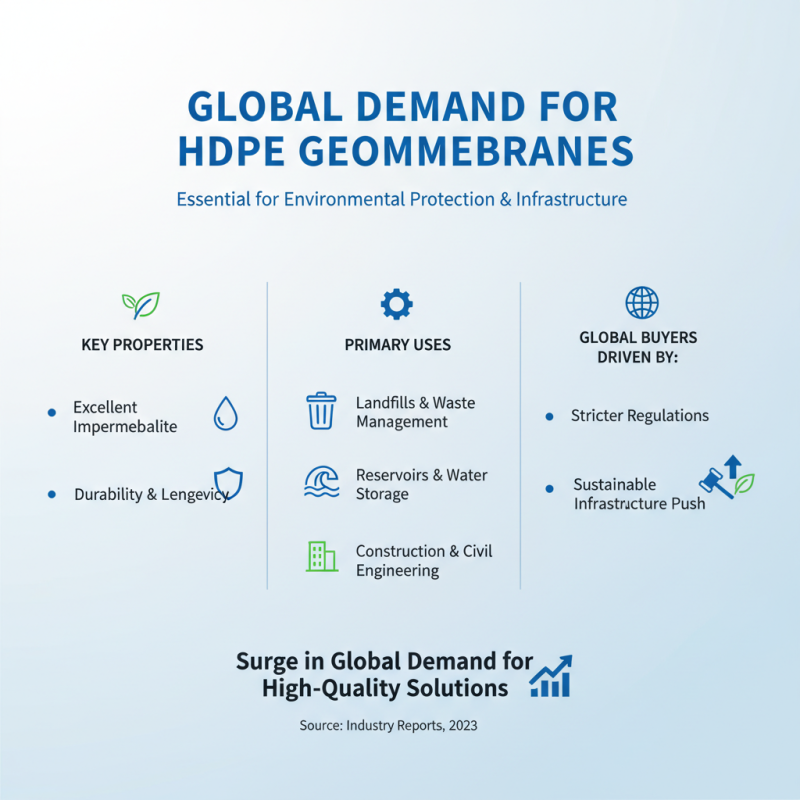
The demand for HDPE geomembranes has surged globally. These materials are essential in various industries, including construction and waste management. They provide excellent impermeability, making them suitable for landfills and reservoirs. Countries worldwide seek high-quality options to ensure effective environmental protection.
Many buyers are looking for dependable suppliers who can meet stringent quality standards. However, challenges arise in sourcing. Not all manufacturers maintain consistent product performance. Some may compromise on quality to cut costs, leading to durability issues. Buyers must scrutinize certifications and material specifications to avoid such pitfalls.
Environmental concerns drive the need for better solutions. HDPE geomembranes contribute to sustainable practices by reducing leakage and contamination. Yet, buyers often find it hard to balance cost and quality. This dilemma necessitates careful research and consideration. Ultimately, informed decisions can lead to successful projects that benefit the environment and comply with regulations.
Industry Standards and Certifications for HDPE Geomembrane Quality
When considering HDPE geomembranes, industry standards play a crucial role in determining their quality. Different regions may have varying requirements. Certifications from recognized organizations ensure the material meets these standards. For instance, the ASTM and ISO certifications provide benchmarks for durability and performance. This helps buyers in selecting reliable products.
Quality verification is essential. Not all geomembranes are created equal. Some may not meet thickness or tensile strength standards. Such discrepancies can lead to failures in containment applications. It is vital for buyers to ask for documentation. This includes test results and material data sheets. Clear information on UV and chemical resistance is also critical.
Additionally, the impact of manufacturing processes cannot be overlooked. Some manufacturers may cut corners to reduce costs. This could affect the overall longevity of the product. Regular audits and third-party inspections can ensure compliance. Trust in the quality of HDPE geomembranes is paramount for successful applications in environmental protection.
Comparative Analysis of HDPE Geomembranes vs. Other Materials
HDPE geomembranes are widely recognized for their exceptional impermeability and durability. This makes them a favored choice in environmental projects, especially in waste containment and water management. Compared to materials like PVC or LDPE, HDPE offers superior chemical resistance. It withstands harsh environmental conditions better, ensuring longevity.
However, not all applications may require the robust characteristics of HDPE. For example, in less demanding environments, other materials might perform adequately and be more cost-effective. PVC geomembranes, while not as durable, can be easier to install, which may benefit certain projects. Evaluating the specific requirements is key.
Consider the installation environment. A facility with frequent temperature fluctuations may face more challenges with materials that are not flexible. HDPE can become brittle over time under extreme conditions. Thus, while it is a strong contender, it isn’t infallible. Each choice warrants careful analysis, as material performance can greatly affect project outcomes.
Applications of HDPE Geomembranes in Waste Management and Construction
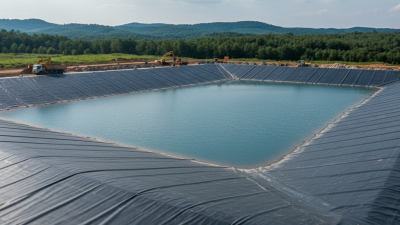
HDPE geomembranes play a crucial role in waste management and construction. These durable liners help in containing waste, preventing soil and water contamination. A report from Grand View Research indicates that the geomembrane market is expected to reach $3.4 billion by 2025. This growth is largely driven by rising environmental concerns and the need for effective waste containment solutions.
In landfill applications, HDPE geomembranes serve as barriers. They can withstand harsh chemicals and extreme temperatures. Recent studies show that proper installation of these liners can reduce leachate production by up to 50%. Additionally, in construction projects, they offer thermal insulation and stability. Designers must ensure the quality of materials used, as subpar geomembranes can lead to costly failures.
Despite their advantages, HDPE geomembranes are not without challenges. Issues such as improper installation and material degradation over time can arise. Regular maintenance and inspection are essential to extend their lifespan. Professionals in the field stress the importance of adhering to stringent specifications to achieve the best results. Attention to detail can prevent potential failures and ensure effective waste management solutions.